
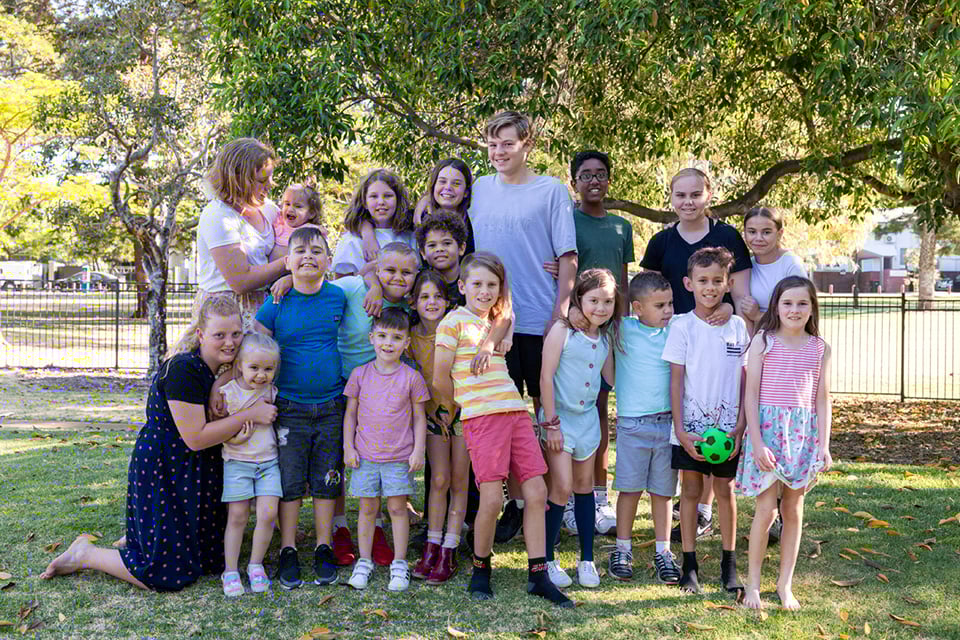
The Human Development and Community Wellbeing (HDCW) Team exists to generate community-led, evidence-based solutions to human development and population health challenges, in order to improve the lives of children, families and their communities. The team does this by:
- Listening to the community and co-designing solutions
-
Influencing policy and practise
-
Building team capacity and sustainability
-
Advocating for institutional changes
-
Employing high quality research methods and evidence
-
Collaborating and supporting each other to thrive
-
Setting new research agendas
About the Team
The Human Development and Community Wellbeing Team, led by Professor Francis Mitrou is a multidisciplinary team that integrates expertise across a range of disciplines including population child development, economics, health promotion, public health, psychology, developmental psychopathology, neurodiversity, communications science, and mixed methods research.
With a wide-reaching network of partners and collaborators spanning public, non-government, and philanthropic sectors, the team also brings substantial collective experience across the research and tertiary education sectors.
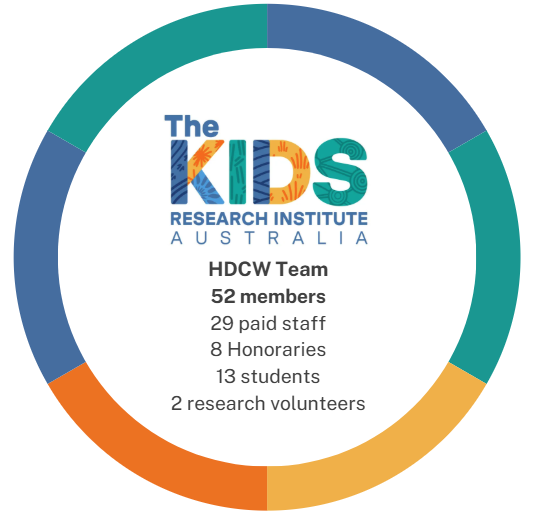
Team and Funding Highlights
Category 1 Funding
- Professor Francis Mitrou, Dr Vincent Mancini, Dr Vu Vuong, and Emeritus Professor Stephen Zubrick were recently awarded $1.3m to lead the four-year ARC Discovery Project: “How Australian Fathers Shape the Trajectory of their Children’s Wellbeing” (DP250104711: 2025-2029).
- Professor Francis Mitrou and Dr Ha Nguyen were recently awarded $695k in competitive Category 1 funding to lead the MRFF Childhood Mental Health Research Grant: “Causal Impact of COVID-19 Lockdowns on the Mental Health of Australian Children” (MRF2036125: 2025-2027).
- Professor Francis Mitrou holds a National Health and Medical Research Council (NHMRC) Synergy Grant as Lead Investigator, with a 5-year, $5m project titled: “Improving Aboriginal health by understanding the influence of early life environments and contacts with health and social service systems over time and across generations.” (NHMRC Synergy Grant 2023-28. GNT2018970). The Synergy scheme represents the pinnacle of the NHMRC’s grants roster. The project involves a team of 20 Chief and Associate Investigators including six First Nations Investigators, with governance provided by an Aboriginal Steering Committee. The project is based around the Western Australian Aboriginal Child Health Survey (WAACHS) linked to multiple WA Government administrative datasets.
Recent Funding
- Early-to-Mid-Career Researcher Dr Thom Nevill won the $25k People’s Choice Illuminate Award 2025 to support their project titled: Improving support for children with Specific Learning Disabilities through early diagnosis.
- The Western Australia Primary Health Alliance (WAPHA) awarded Professor Francis Mitrou, Emeritus Professor Stephen Zubrick, Dr Vu Vuong, Briana Guerrini, and Johanna Rewa a research tender to evaluate the free, digital mental health intervention – Moderated Online Social Therapy (MOST) for young people in Western Australia
- Senior Research Fellow Dr Vincent Mancini, Professor Francis Mitrou, and Dr Lynne Millar in a team with five external investigators won a $388k healthway grant to develop, implement, and evaluate an implementation aimed at improving the wellbeing and involvement of Western Australian fathers in the Neonatal Intensive Care Unit (NICU) to deliver better outcomes for children and families.
- Dr Renee Teal won a seeding grant to support her efforts in identifying the determinants of social and emotional wellbeing (SEWB) among Aboriginal children aged 5 and under in Western Australia.
- Dr Vincent Mancini won a seeding grant to identify risk factors of problem sport gambling behaviour in Australian young people and identify key priorities to mitigate its normalisation and the subsequent mental health risks for young people.
- Team Leader Professor Francis Mitrou was awarded a five-year Stan Perron Foundation People Fellowship 2024-2028 titled: Preventing deep and persistent disadvantage, reducing mental health problems in young people, and improving the health, education, community and justice outcomes for Aboriginal children and families in Western Australia. This prestigious fellowship provides vital salary support for Professor Mitrou allowing for his continued leadership of the valuable work of the HDCW Team.
ARC Life Course Centre
The ARC Centre of Excellence for Children and Families over the Life Course (Life Course Centre or LCC) is a prestigious research centre dedicated to breaking the cycle of deep and persistent disadvantage experienced by Australian children and families.
As one of four national university collaborators, The University of Western Australia (UWA) plays a key role in the Centre’s research efforts. Professor Francis Mitrou is the UWA Node Director. A number of staff from the HDCW team at The Kids are proud members of the Life Course Centre and are actively involved in a range of funded projects. These projects focus on evaluating and developing evidence-based solutions to improve life outcomes for vulnerable children and families, supporting them to thrive across the life course.
Team leader
Team members (24)

BHSc
Program Manager

BA (Human Geography and Urban Planning)
Program Coordinator, ARC Life Course Centre

BA, PostGradDip; PhD
Senior Research Fellow

PhD
Senior Research Officer

Data Analyst

PhD
MDSc
Research Data Analyst
PhD
Senior Research Fellow

PhD (Clinical Psychology)
MPsych(Org); BPsychSc(Hons); BCom
Project Coordinator

BA(Hons), PhD
Research officer

BSc, GradDipRepSc, PhD
BPol
Consumer Academic
PhD (Psychology)

BA (hons)
Research Assistant and PhD Candidate
BSc
BSc DipEd MSpEd EdD

BSc, MPH
Project Coordinator
BSc, Post Grad Dip, PhD
Senior Research Officer
BSc (Psych), MRes (Psych)
BSc, Dip Ed, Post Grad Dip (Health)
Project Coordinator

BSc
MPH
BSc (Psych)
Research Assistant
Featured projects
WA Aboriginal Child Health Survey (WAACHS) Linked Data Study
This study is a partnership between researchers, the Aboriginal community and government to provide evidence for policy and practice addressing high priority health and wellbeing issues for Aboriginal children and families.
The Life Course Centre
The Australian Research Council (ARC) Centre of Excellence for Children and Families Over the Life Course
Other projects