
Search
This letter congratulates Mulraney et al. regarding their paper on disruptive mood dysregulation disorder in children with ADHD.
The objective of this study is to compare the time trend of reported diagnoses of autism spectrum disorder, hyperkinetic disorder, Tourette's syndrome, and...
We aimed to investigate juvenile justice encounters in children with and without ADHD.
We examined the degree of parental and child mental health in a community sample of children diagnosed with Attention Deficit Hyperactive Disorder and the...
This paper profiles the functional pattern of DNA variants found at a higher rate in patients with autism spectrum disorder (ASD), X-linked intellectual...
Early identification and intervention are recognised as important elements of the clinical pathway for autism spectrum disorder (ASD). Children with ASD and attention deficit hyperactivity disorder (ADHD) may be diagnosed at a different age than children who only have one of these diagnoses.
Emerging research suggests that maternal immune activation (MIA) may be associated with an increased risk of adverse neurodevelopmental and mental health outcomes in offspring. Using data from the Raine Study, we investigated whether MIA during pregnancy was associated with increased behavioral and emotional problems in offspring longitudinally across development.
Attention Deficit/hyperactivity disorder (ADHD) is conceptualized differently in the Diagnostic and Statistical Manual (DSM-5), the International Classification of Diseases-10 (ICD-10), and the Hierarchical Taxonomy of Psychopathology (HiTOP) frameworks. This study applied independent cluster confirmatory factor analysis (ICM-CFA), exploratory structure equation model with target rotation (ESEM), and the S-1 bi-factor CFA approaches to evaluate seven ADHD models yielded by different combinations of these taxonomic frameworks.
Citation: Ibilola O, Silva D. Environmental (Perinatal) risk factors of ADHD in a sibling control design study. Open Access Journal of Behavioural
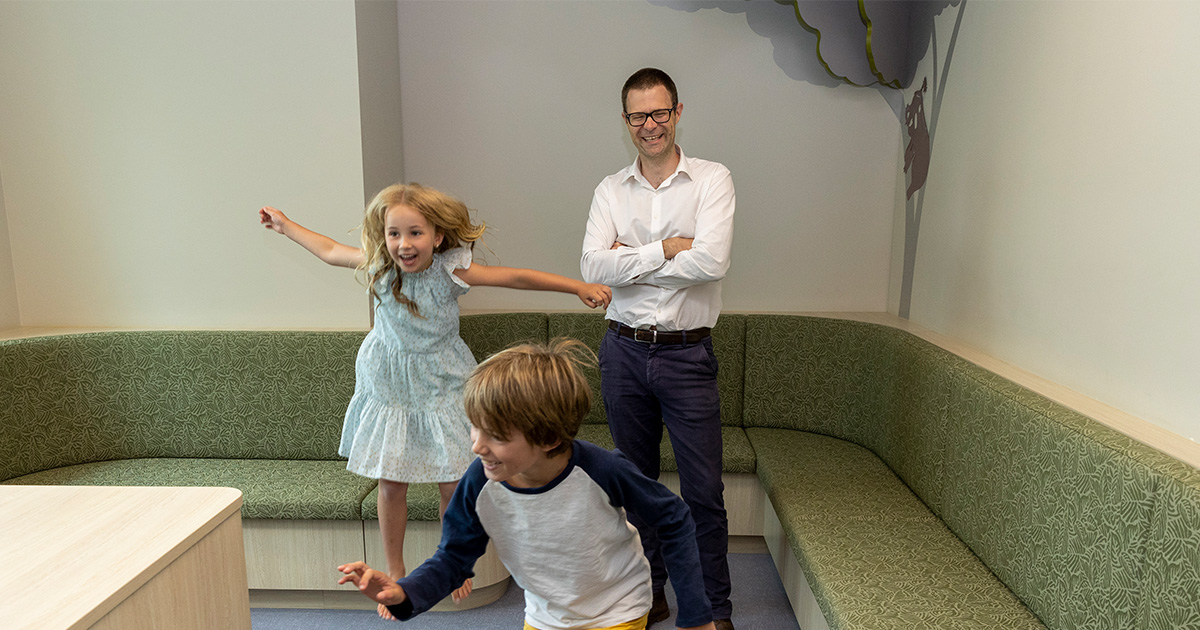
The Kids Research Institute Australia's Professor Andrew Whitehouse and Sarah Pillar share four things families can do to support their child while waiting to receive an ADHD or autism diagnostic assessment.