
Search
Western Australia (WA) has experienced a resurgence of congenital syphilis. Appropriate microbiology testing of the neonate is recommended to confirm infection, including syphilis immunoglobulin M (IgM), rapid plasma reagin (RPR) paired with a maternal sample, and polymerase chain reaction (PCR) on placenta and nasal swabs.
Aboriginal and Torres Strait Islander women experience a disproportionate burden of hyperglycaemia in pregnancy. A multi-component health systems intervention aiming to improve antenatal and postpartum care was implemented across Australia’s Northern Territory (NT) and Far North Queensland (FNQ) between 2016 and 2019. Components included clinician education, improving recall systems, enhancing policies and guidelines, and embedding Diabetes in Pregnancy (DIP) Clinical Registers in systems of care. This program was evaluated to determine impacts on clinical practice and maternal health.
Rheumatic heart disease (RHD) is the acquired autoimmune heart valve damage resulting from untreated infection with the Streptococcus pyogenes bacterium, which affects people experiencing socioeconomic disadvantage globally. This study measured RHD-associated major adverse cardiovascular events (MACE) and the increased risk associated with pregnancy among women diagnosed with RHD.
Syphilis remains a global public health concern, particularly in pregnancy due to the risk of congenital syphilis. The WHO recommends benzathine penicillin G (BPG) as the standard treatment in pregnant women, whilst the optimal dosing strategy has not been established, particularly in relation to the impact of gestational age. This study sought to characterize the pharmacokinetics (PK) of a three-dose regimen of intramuscular BPG, given at weekly intervals, in pregnant women with syphilis.
Consumption of a Mediterranean diet (MD) has been associated with reduced incidence of non-communicable diseases and reduced overall mortality, with epigenomic effects representing plausible mediators. The aim of this pilot study was to explore potential epigenetic associations between DNA methylation markers in blood and adherence to an MD in pregnancy.
Hepatitis B (HBV) prevalence is very high in pregnant women in the Dolpa district of Nepal, a region characterised by a remote geographic landscape and low vaccination coverage. Using mathematical modelling, we evaluated the impact of third-trimester tenofovir disoproxil fumarate (TDF) prophylaxis on HBV burden and estimated the time required to achieve HBV elimination in Dolpa.
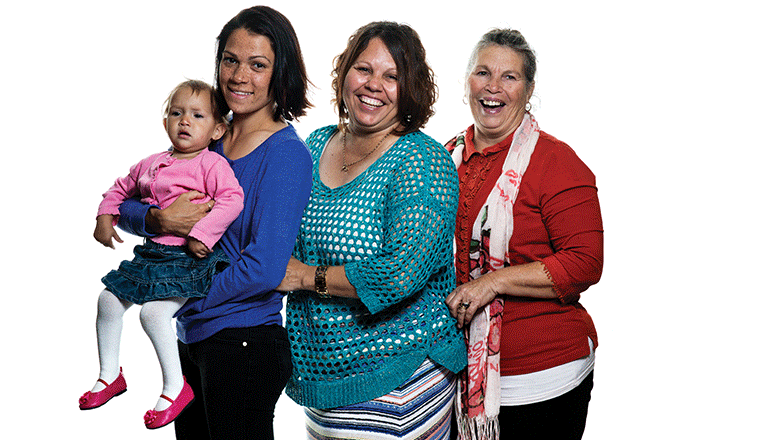
A study by researchers at The Kids Research Institute Australia has found Aboriginal mothers are at a significantly greater risk of preventable death than other Australia

A group of 19 Aboriginal women from South Australia, along with researchers from The Kids Research Institute Australia, have developed a culturally responsive, evidence-based model of care to support Aboriginal women with cardiometabolic complications in pregnancy in SA.
While benefits of involving consumers in research are well established, bereaved parents face unique challenges, and descriptions of their experiences with co-designed stillbirth research are lacking. The collective experience of ‘Project Engage’ involved co-designing resources to support bereaved parents’ involvement in research.
To evaluate descriptive efficacy data, exploratory immunogenicity data, and safety follow-up through study completion from the global, phase 3 MATISSE (Maternal Immunization Study for Safety and Efficacy) maternal vaccination trial of bivalent respiratory syncytial virus (RSV) prefusion F protein vaccine (RSVpreF).