
Search
Drug-resistant tuberculosis (DR-TB) is a significant public health concern, often resulting in poor treatment outcomes. This study aims to identify predictors of poor treatment outcomes among patients with DR-TB in Hunan Province, China.
Antimicrobial resistance (AMR) remains a major topic of interest in infectious disease management. We studied AMR in Clostridioides difficile isolated in Cambodia.
Tuberculosis (TB) is the leading infectious cause of death globally, with approximately three million cases remaining undetected, thereby contributing to community transmission. Understanding the spatial distribution of undetected TB in high-burden settings is critical for designing and implementing geographically targeted interventions for early detection and control.
Globally, tuberculosis (TB) is the leading infectious cause of morbidity and mortality, with the risk of infection affected by both individual and ecological-level factors. While systematic reviews on individual-level factors exist, there are currently limited studies examining ecological-level factors associated with TB incidence and mortality. This study was conducted to identify ecological factors associated with TB incidence and mortality.
Kefyalew Alene BSc, MPH, PhD Head, Geospatial and Tuberculosis 0404705064 Kefyalew.alene@thekids.org.au Honorary Research Fellow Dr Kefyalew Alene
Low tuberculosis (TB) case detection remains a major challenge in achieving the End TB targets. New strategies that consider local contexts are needed in countries with high TB burdens like Ethiopia. This study examined the effect of integrating traditional and modern TB care to increase the TB case detection rate.
By mapping land use under projections of socio-economic change, ecological changes can be predicted to inform conservation decision-making. We present a land use model that enables the fine-scale mapping of land use change under future scenarios.
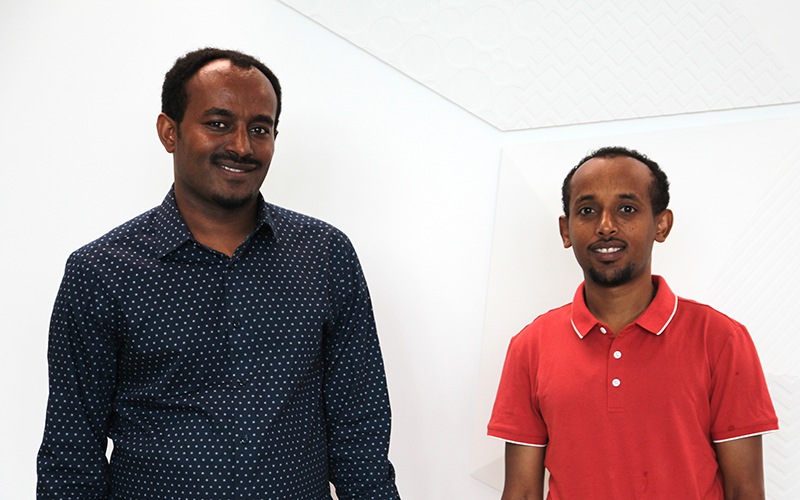
New research highlights the long-term physical health problems faced by people who survive drug-resistant tuberculosis (TB) .
In this report, we present a protocol for a geospatial meta-analysis to investigate the spatial patterns of TB prevalence in Ethiopia
Kefyalew Alene BSc, MPH, PhD Head, Geospatial and Tuberculosis 0404705064 Kefyalew.alene@thekids.org.au Honorary Research Fellow Dr Kefyalew Alene