
Search
Measuring body weight during therapy has received insufficient attention in poor resource settings like Ethiopia. We aimed to investigate the association between weight change during therapy and treatment outcomes among patients with multidrug-resistant tuberculosis in northwest Ethiopia.
Interferon γ release assays (IGRAs) are widely used for diagnosis of latent tuberculosis infection. However, with repeated testing, IGRA transformation (conversion or reversion) may be detected and is challenging to interpret. We reviewed the frequency of and risk factors for IGRA transformation.
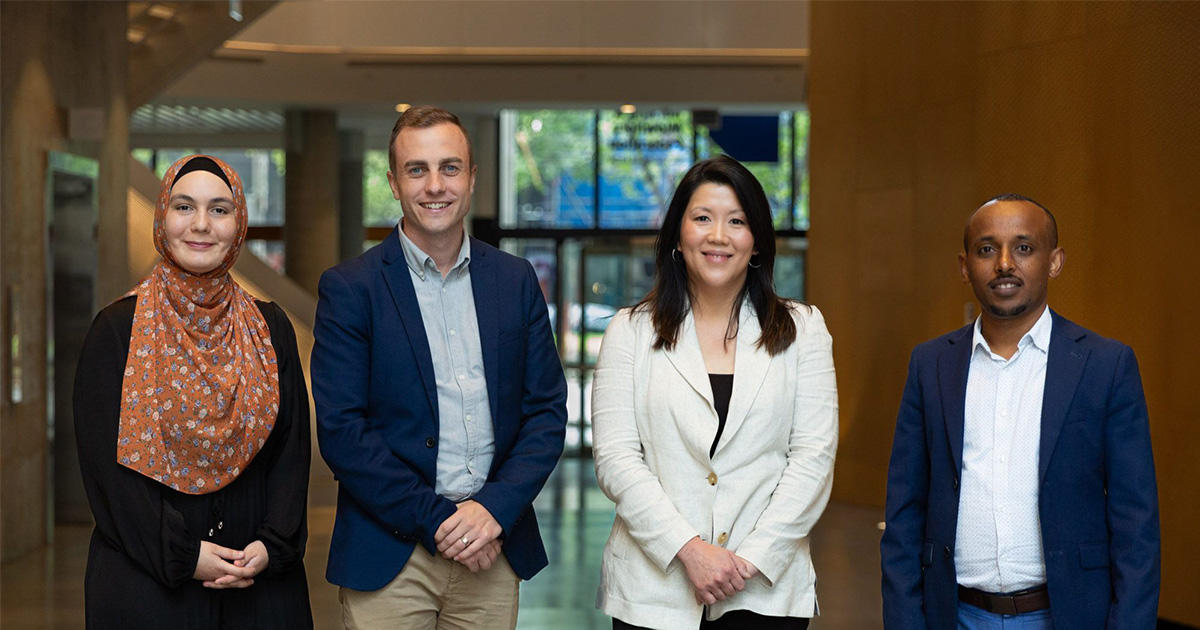
A leading tuberculosis researcher from The Kids Research Institute Australia and Curtin University has been named a finalist for the Association of Australian Medical Research Institutes (AAMRI) 2024 Rising Star Award.
Globally, tuberculosis (TB) is the leading infectious cause of morbidity and mortality, with the risk of infection affected by both individual and ecological-level factors. While systematic reviews on individual-level factors exist, there are currently limited studies examining ecological-level factors associated with TB incidence and mortality. This study was conducted to identify ecological factors associated with TB incidence and mortality.
While undernutrition has been identified as a common risk factor for tuberculosis (TB), its impact on treatment outcomes has yet to be investigated in high TB burden and low-income countries such as Ethiopia. Therefore, this study aimed to investigate the effect of undernutrition on treatment outcomes among patients with TB in northwest Ethiopia.
Multidrug-resistant tuberculosis (MDR-TB) is a global health threat associated with high morbidity and mortality rates. Diagnosis and treatment delays are associated with poor treatment outcomes in patients with MDR-TB. However, the risk factors associated with these delays are not robustly investigated, particularly in high TB burden countries such as China.
Bacille Calmette-Guérin (BCG) is the most commonly administered vaccine in human history. The medical application of BCG extends far beyond the fight against tuberculosis. Despite its stellar medical record over 100 years, insight into how BCG provides this vast range of benefits is largely limited, both for its pathogen-specific (tuberculosis) as well as pathogen-agnostic (other infections, autoimmunity, allergies, and cancer) effects.
BCG vaccination and revaccination are increasingly being considered for the protection of adolescents and adults against tuberculosis and, more broadly, for the off-target protective immunological effects against other infectious and noninfectious diseases. Within an international randomized controlled trial of BCG vaccination in healthcare workers (the BRACE trial), we evaluated the incidence of local and serious adverse events, as well as the impact of previous BCG vaccination on local injection site reactions (BCG revaccination).