Skip to content
The Kids Research Institute Australia logo
Donate

Search

Improved Glycemic Outcomes With Diabetes Technology Use Independent of Socioeconomic Status in Youth With Type 1 Diabetes

Technology use in type 1 diabetes (T1D) is impacted by socioeconomic status (SES). This analysis explored relationships between SES, glycemic outcomes, and technology use.

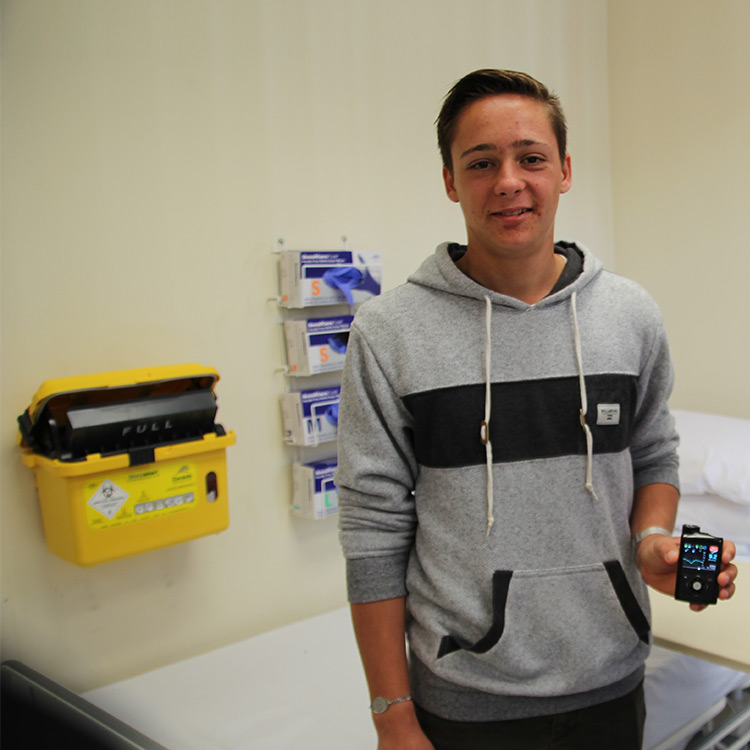
Advances in Automated Insulin Delivery with the Medtronic 780G: The Australian Experience

To assess the real-world performance of MiniMed™ 780G for Australians with type 1 diabetes (T1D) following advanced hybrid closed loop (AHCL) activation and to evaluate the effect of changing from MiniMed 670/770G to 780G.

Protocol for a nested case-control study design for omics investigations in the Environmental Determinants of Islet Autoimmunity cohort

The Environmental Determinants of Islet Autoimmunity (ENDIA) pregnancy-birth cohort investigates the developmental origins of type 1 diabetes (T1D), with recruitment between 2013 and 2019. ENDIA is the first study in the world with comprehensive data and biospecimen collection during pregnancy, at birth and through childhood from at-risk children who have a first-degree relative with T1D.

Efficacy of the MiniMed™ 670G hybrid closed loop system in managing postprandial glucose excursion with high protein high fat foods in children and adolescents under free-living conditions

High protein high fat meals are considered “difficult” foods because they can cause prolonged hyperglycemia after ingestion. The potential of hybrid closed loop therapy in managing postprandial glucose excursions with these difficult foods remains unknown. This pilot study aimed to explore the impact of manual mode in standard insulin pump therapy and auto mode with hybrid closed loop pump therapy in managing glucose excursions caused by HPHF foods and to obtain feedback from families about each mode.

Impact of Body Composition on the Accuracy of a Medtronic Guardian Continuous Glucose Monitoring System

Continuous glucose monitoring systems are used in therapeutic decisions for diabetes management, however, the impact of body composition on CGM accuracy is not known. Body composition variables were collected in an observational study designed to determine the accuracy of an investigational Medtronic Guardian™ sensor 3.

Transition models of care for type 1 diabetes: a systematic review

Managing the care regimen for Type 1 Diabetes is challenging for emerging adults, as they take on greater responsibility for self-management. A diverse range of models of care have been implemented to improve safety and quality of care during transition between paediatric and adult services. However, evidence about acceptability and effectiveness of these is limited.

Blood pressure in adolescents and young adults with type 1 diabetes: data from the Australasian Diabetes Data Network registry

Hypertension increases complication risk in type 1 diabetes (T1D). We examined blood pressure (BP) in adolescents and young adults with T1D from the Australasian Diabetes Data Network, a prospective clinical diabetes registry in Australia and New Zealand. 

Measures of Early-life Behavior and Later Psychopathology in the LifeCycle Project-EU Child Cohort Network: A Cohort Description

The EU LifeCycle Project was launched in 2017 to combine, harmonize, and analyze data from more than 250,000 participants across Europe and Australia, involving cohorts participating in the EU-funded LifeCycle Project. The purpose of this cohort description is to provide a detailed overview of the major measures within mental health domains that are available in 17 European and Australian cohorts participating in the LifeCycle Project.

Impact of Missing Data on the Accuracy of Glucose Metrics from Continuous Glucose Monitoring Assessed Over a 2-Week Period

To explore the impact of missing data on the accuracy of continuous glucose monitoring (CGM) metrics collected for a 2-week period in a clinical trial.