
Search
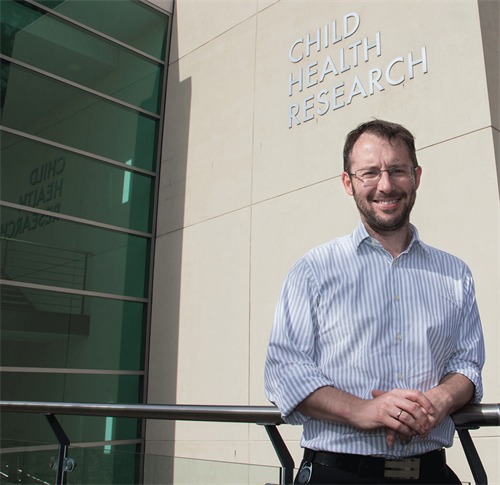
Researchers from The Kids Research Institute Australia and Curtin University will use a $3.9 million grant from the National Health and Medical Research Council to investigate whether a type of whooping cough vaccine could provide bonus protection against food allergies and eczema.
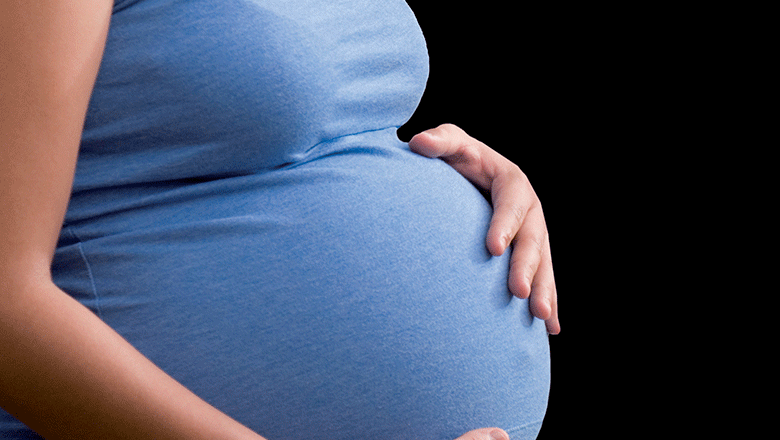
The Kids Research Institute Australia have welcomed the announcement by Health Minister Dr Kim Hames that whooping cough vaccination is to be provided free
Latest news & events at the Wesfarmers Centre of Vaccines & Infectious Diseases.
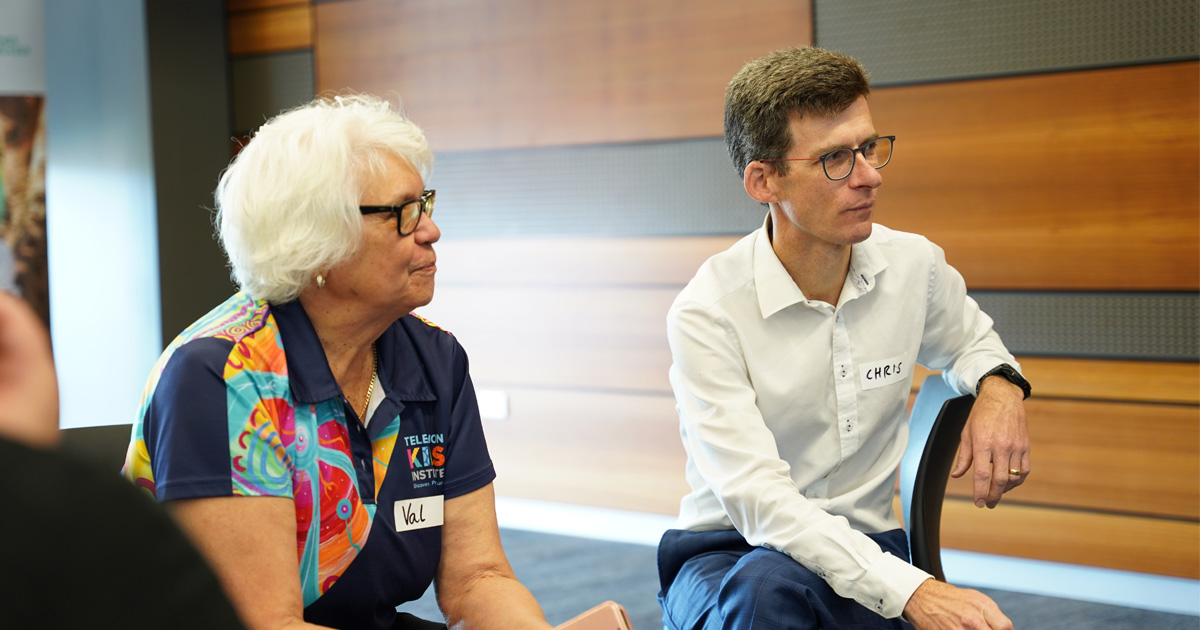
Researchers from the Wesfarmers Centre of Vaccines and Infectious Diseases at The Kids Research Institute Australia have shared their expertise with the community in Cockburn, covering topics ranging from respiratory disease in babies to recurring ear infections in kids.
Clinical Professor Tobias Strunk, Dr Andrew Currie and their Neonatal Infection and Immunity Team have become the newest members of the Wesfarmers Centre of Vaccines and Infectious Diseases.
We compared the effect of a heterologous wP/aP/aP primary series (hereafter mixed wP/aP) versus a homologous aP/aP/aP primary schedule (hereafter aP-only) on antibody responses to co-administered vaccine antigens in infants and toddlers.
Evidence suggests that children who had received an initial priming dose of whole-cell pertussis (wP) vaccine, rather than acellular pertussis (aP) vaccine, had a lower risk of developing IgE-mediated food allergy, the most common cause of anaphylaxis-related hospital presentations of childhood.
Asthma is among the commonest noncommunicable diseases of childhood and often occurs with other atopic comorbidities. A previous case-control study found evidence that compared to children who received acellular pertussis (aP) vaccines in early infancy, children who received one or more doses of whole-cell pertussis (wP) vaccine had lower risk of developing IgE-mediated food allergy. We hypothesized that wP vaccination in early infancy might protect against atopic asthma in childhood.
The purpose of this double-blind, randomised, controlled trial is to compare allergic outcomes in children following vaccination with acellular pertussis (aP) antigen (standard of care in Australia) given at 2 months of age versus whole cell pertussis (wP) in the infant vaccine schedule.
The monovalent acellular pertussis vaccine is immunogenic and safe in neonates