Skip to content

Search

Longitudinal Profiling of the Human Milk Microbiome from Birth to 12 Months Reveals Overall Stability and Selective Taxa-Level Variation

Human milk bacteria contribute to gut microbiome establishment in breastfed infants. Although breastfeeding is recommended throughout infancy, temporal variation in the milk microbiome-particularly beyond solid food introduction-remains understudied. We analyzed 539 milk samples from 83 mother-infant dyads between 1 week and 12 months postpartum using full-length 16S rRNA gene sequencing.

Breastfeeding

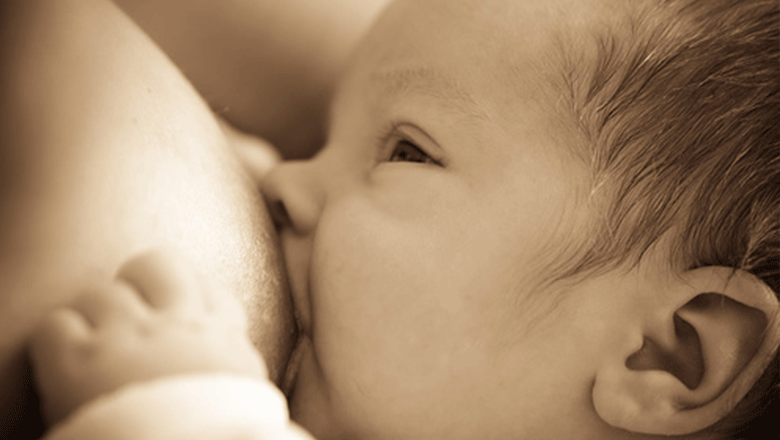
Convenient, readily available and helping create a close and loving bond between baby and mother, breastfeeding is highly regarded for optimising infant health and preventing chronic disease in adulthood.

Maternal prebiotic supplementation during pregnancy and lactation modifies the microbiome and short chain fatty acid profile of both mother and infant

Improving maternal gut health in pregnancy and lactation is a potential strategy to improve immune and metabolic health in offspring and curtail the rising rates of inflammatory diseases linked to alterations in gut microbiota. Here, we investigate the effects of a maternal prebiotic supplement (galacto-oligosaccharides and fructo-oligosaccharides), ingested daily from <21 weeks' gestation to six months' post-partum, in a double-blinded, randomised placebo-controlled trial. 

Study Protocol for a Stepped-Wedge Cluster (Nested) Randomized Controlled Trial of Antenatal Colostrum Expression (ACE) Instruction in First-Time Mothers: The ACE Study

Although many mothers initiate breastfeeding, supplementation with human-milk substitutes (formula) during the birth hospitalization is common and has been associated with early breastfeeding cessation. Colostrum hand expressed in the last few weeks before birth, known as antenatal colostrum expression (ACE), can be used instead of human-milk substitutes. However, evidence is lacking on the efficacy of ACE on breastfeeding outcomes and in non-diabetic mothers. 

World Allergy Organization (WAO) Diagnosis and Rationale for Action against Cow's Milk Allergy (DRACMA) guidelines update – X – Breastfeeding a baby with cow's milk allergy

Cow's milk allergy is rare in exclusively breastfed infants. To support the continuation of breastfeeding an infant after diagnosis with a cow's milk allergy, it is critical to examine the evidence for and against any form of cow's milk elimination diet for lactating mothers. In this narrative review, we highlight the lack of high-quality evidence, hence subsequent controversy, regarding whether the minuscule quantities of cow's milk proteins detectable in human milk cause infant cow's milk allergy symptoms.

Effect of maternal prebiotic supplementation on human milk immunological composition: Insights from the SYMBA study

Immunomodulatory proteins in human milk (HM) can shape infant immune development. However, strategies to modulate their levels are currently unknown. This study investigated whether maternal prebiotic supplementation alters the levels of immunomodulatory proteins in HM. 

Maternal diet during breastfeeding: Could it influence food allergy risk in children?

Human milk is rich in immuno-modulatory factors that have the potential to shape immune development and influence allergy risk in children. In this article, we describe how breast milk may contribute to making the infant less prone to developing allergies.

Maternal Allergic Disease Phenotype and Infant Birth Season Influence the Human Milk Microbiome

Early infancy is a critical period for immune development. In addition to being the primary food source during early infancy, human milk also provides multiple bioactive components that shape the infant gut microbiome and immune system and provides a constant source of exposure to maternal microbiota. Given the potential interplay between allergic diseases and the human microbiome, this study aimed to characterise the milk microbiome of allergic mothers.

An Old Story Back: Human Milk Antibodies' Protective Roles Against Allergy Development

Human milk is a rich source of immunomodulatory factors that influence the development of the infant immune system, including susceptibility to allergic diseases. Among these components, milk antibodies have been extensively studied for their role in protecting against infections; however, their potential contribution to allergy prevention may be equally important. The mechanisms of protection include allergen exclusion, enhanced and targeted antigen presentation, immune modulation via shaping of the infant gut microbiome, and direct regulation of gut immune responses. 

A Scoping Review of Methodologies Exploring Diet and Health Outcomes in Lactating Women: What Has Been Done and Where to Next?

Developing dietary guidelines for lactating women presents significant challenges, due to limited evidence being available on their specific nutrient needs and the biological impacts of various dietary dimensions. Current dietary recommendations often rely on data from nonlactating women, leading to potential inaccuracies.