
Search
B-cell acute lymphoblastic leukemia (B-ALL) is the most common pediatric cancer. Current therapeutic regimens have improved 5-year event-free survival rates to 90%, however clinical outcomes for high-risk subgroups, such as BCR-ABL1+ B-ALL and relapsed ALL, remain poor. In addition, 16% of newly diagnosed children with ALL present with vertebral compression fractures. Moreover, 16% of children with ALL undergoing glucocorticoid therapy also experience a high incidence of vertebral fractures, indicating that bone health may be compromised by both leukemia progression and osteotoxicity of chemotherapy.
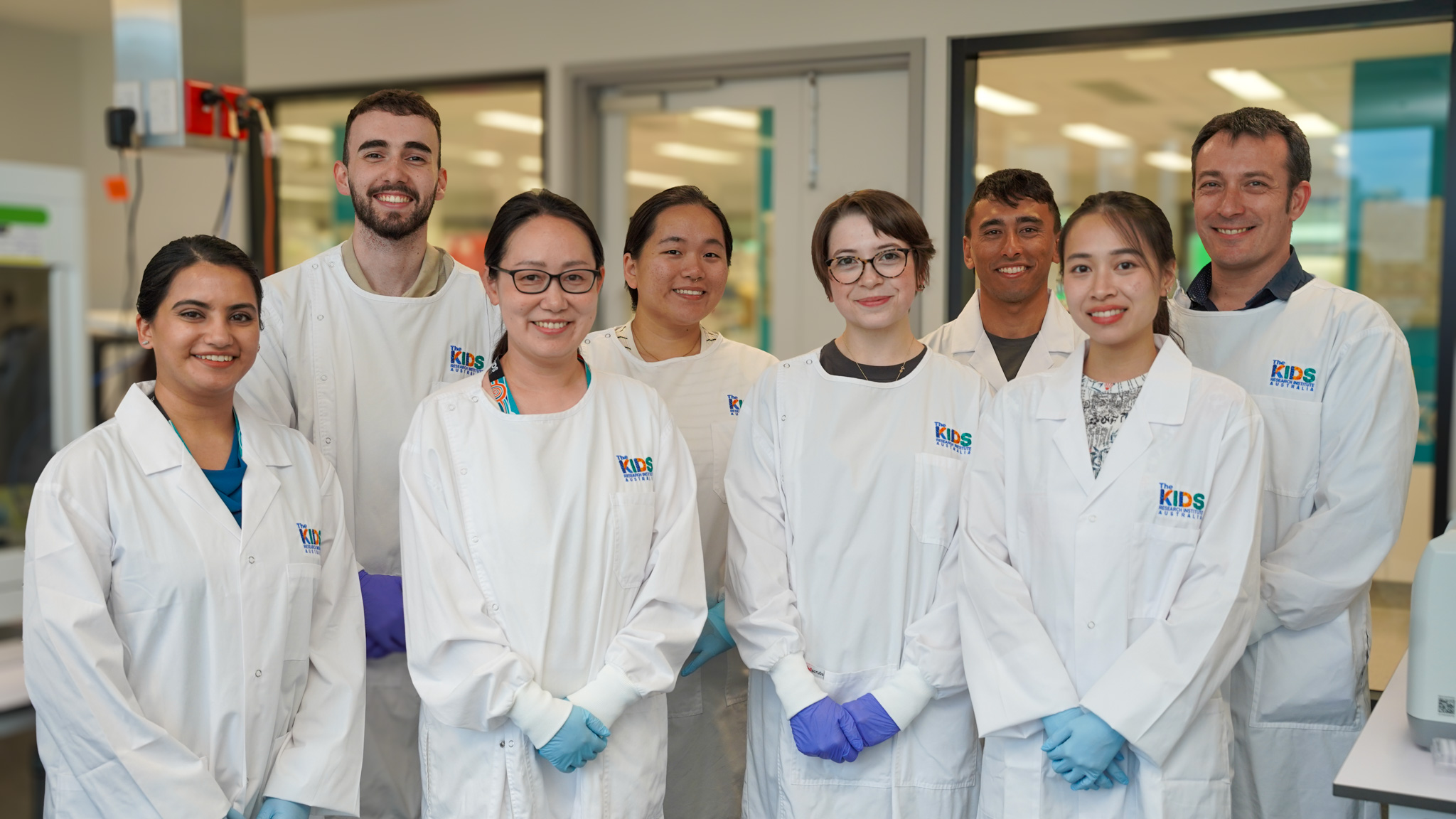
The Translational Genomics in Leukaemia team is focused on identifying the causes of leukaemia, with the goal of developing new targeted treatments to improve quality of care and long-term survival for all children with leukaemia.
Acute megakaryoblastic leukemia of Down syndrome (DS-AMKL) is a model of clonal evolution from a preleukemic transient myeloproliferative disorder requiring both a trisomy 21 (T21) and a GATA1s mutation to a leukemia driven by additional driver mutations.
Research focused on Down syndrome has increased in the last several years to advance understanding of the consequences of trisomy 21 (T21) on molecular and cellular processes and, ultimately, on individuals with Down syndrome. The Trisomy 21 Research Society (T21RS) is the premier scientific organization for researchers and clinicians studying Down syndrome.
Infants with KMT2A-rearranged B-cell precursor acute lymphoblastic leukemia (ALL) have poor outcomes. There is an urgent need to identify novel agents to improve survival. Proteasome inhibition has emerged as a promising therapeutic strategy for several hematological malignancies. The aim of this study was to determine the preclinical efficacy of the selective proteasome inhibitor carfilzomib, for infants with KMT2A-rearranged ALL.
DYRK1A is a serine/threonine kinase encoded on human chromosome 21 (HSA21) that has been implicated in several pathologies of Down syndrome (DS), including cognitive deficits and Alzheimer's disease. Although children with DS are predisposed to developing leukemia, especially B cell acute lymphoblastic leukemia (B-ALL), the HSA21 genes that contribute to malignancies remain largely undefined. Here, we report that DYRK1A is overexpressed and required for B-ALL. Genetic and pharmacologic inhibition of DYRK1A decreased leukemic cell expansion and suppressed B-ALL development in vitro and in vivo.
The bone marrow microenvironment (BMM) plays a key role in leukemia progression, but its molecular complexity in pre-B cell acute lymphoblastic leukemia (B-ALL), the most common cancer in children, remains poorly understood. To gain further insight, we used single-cell RNA sequencing to characterize the kinetics of the murine BMM during B-ALL progression.
Structural and numerical alterations of chromosome 21 are extremely common in hematological malignancies. While the functional impact of chimeric transcripts from fused chromosome 21 genes such as TEL-AML1, AML1-ETO, or FUS-ERG have been extensively studied, the role of gain of chromosome 21 remains largely unknown.
Children with Down syndrome (constitutive trisomy 21) that develop acute lymphoblastic leukemia (DS-ALL) have a 3-fold increased likelihood of treatment-related mortality coupled with a higher cumulative incidence of relapse, compared with other children with B-cell acute lymphoblastic leukemia (B-ALL).
In this study, we investigate the in vivo synergy between romidepsin and cytarabine