
Search
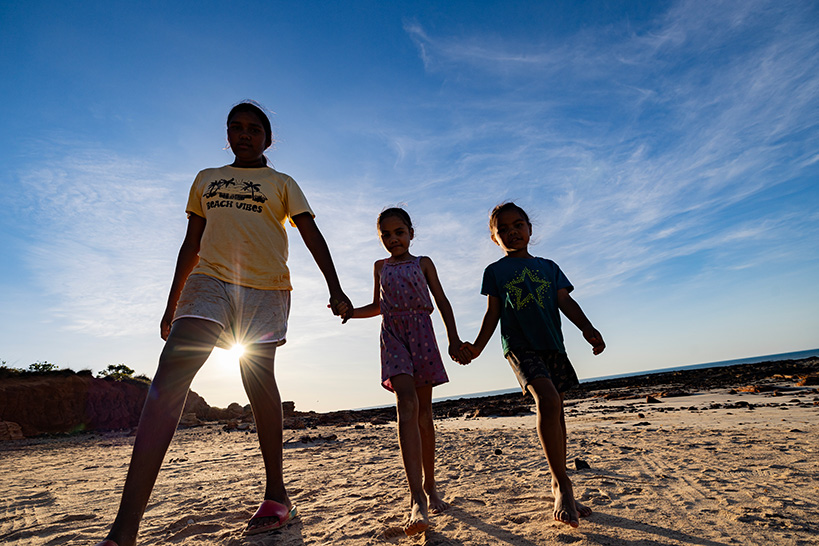
Aboriginal health is everyone's business. The needs of Aboriginal and Torres Strait Islander families and kids is integrated into all relevant areas of our work. Improving the health and wellbeing of Aboriginal and Torres Strait Islander kids and families is an overarching priority for every team at The Kids.
During winter months of temperate regions, concurrent epidemics of multiple respiratory pathogens can occur, causing periods of increased clinical burden. Case time series, which are predominantly used to monitor infection levels, can exhibit substantial noise and day-of-the-week effects, limiting the visual interpretation of trends in raw data.
Inadequate housing and living conditions underpin significant health and wellbeing inequality in Australia, particularly for Indigenous people. This review aimed to define infectious disease (ID) outcomes used to measure the health impact of inadequate housing in Australia within a research context.
Monkeypox virus (MPXV) has been linked to vertical transmission, but systematic data are scarce. We aimed to describe the sociodemographic, clinical, and virological characteristics and assess the frequency and determinants of adverse outcomes in pregnant women with MPXV clade I infection.
In the austral summer of 2021-2022, Australia experienced an unprecedented Japanese encephalitis virus (JEV) outbreak, with detections over 3000 km south of previous occurrences. Given the limited knowledge of JEV transmission ecology in Australia, we developed geospatial models of transmission risk to support the public health response. We created time-varying habitat suitability models for suspected mosquito vectors and ardeid hosts using month-scaled occurrence and covariate data from 2000-2023.
Infants born before 28 weeks' gestation account for approximately 75% of neonatal morbidity and mortality. Late-onset sepsis (LOS) affects around 25% of these infants and is associated with an increased risk of adverse long-term outcomes. The topical application of coconut oil has been used for centuries in newborn care. Coconut oil is rich in saturated fatty acids, several of which have demonstrated antimicrobial properties. It is considered safe for extremely preterm infants, improves skin condition and may reduce the incidence of LOS.
To investigate the follow-up and outcomes of HIV-exposed infants in a setting of low HIV prevalence. This was a multicenter, retrospective study of live-born infants of women known to be living with HIV, at 9 tertiary pediatric centers in Australia and New Zealand from 2009-2025. Antenatal, perinatal, and postnatal data, and outcomes at clinic visits to 18 months of age were collected, including co-morbidities, development, and HIV results.
Although evidence supports clinicians to "safely do less" for febrile infants assessed as low risk of serious bacterial infection (SBI), early discharge may increase caregiver concern and reduce satisfaction with care. We captured the self-reported satisfaction and concerns for families enrolled in the study of fever, blood cultures and readiness for discharge in infants less than 3 months old (FeBRILe3), a prospective safety assessment of early discharge of low-risk febrile infants, to aid evaluation of this practice.
As we finalised our analysis of the adoption of mandatory policies for childhood vaccines in four high-income jurisdictions for our publication, “Convergence on Coercion,” every country on earth was grappling with how to drive uptake of COVID-19 vaccines.
This study adapts the Multiple Streams Framework (MSF) to explore why COVID-19 vaccine mandates were applied at sectoral and subnational levels in Vietnam while the central government maintained that vaccination was voluntary. Document analysis reveals that these mandates arose from the effective coupling of the three streams—problem, policy, and politics—in a setting of authoritarian rule, where the streams function differently (and more uniformly) compared to democratic contexts.