
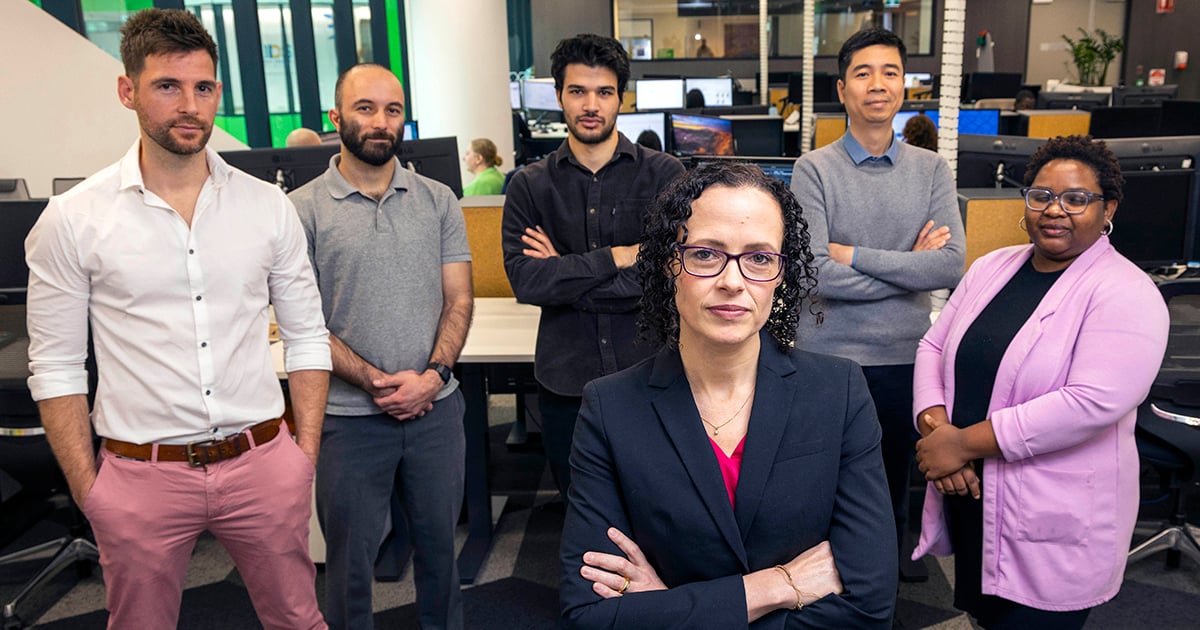
A USD $3.25 million international grant will see researchers from The Kids Research Institute Australia and The University of Western Australia (UWA) play a pivotal role in accelerating the development of next-generation malaria vaccines, helping protect children from one of the world's deadliest infectious diseases.
The funding, awarded by Coefficient Giving to the Global Disease Modelling team led by Professor Melissa Penny, reinforces The Kids’ and UWA's position at the forefront of global vaccine research. The team is internationally recognised for using sophisticated mathematical modelling to inform vaccine development, policy and implementation, helping maximise the impact of new malaria prevention tools and ensuring they reach the children and communities most at risk worldwide.
Malaria continues to pose a major global health threat. In 2024 alone, it caused an estimated 282 million cases and 610,000 deaths, primarily in sub-Saharan Africa.
Professor Penny said the development of more effective vaccines was critical to reducing the devastating global burden of malaria and ultimately achieving elimination.
“Monumental progress has made with existing paediatric malaria vaccines, RTS,S/AS01 and R21/Matrix, which are being deployed in more than 25 African malaria endemic countries,” Professor Penny said.
"The question now is how to develop new and improved vaccines, or vaccines that can also support malaria elimination and burden reduction. The Coefficient Giving grant comes at a critical time, as international funding for malaria control slows while investment in research and development of new tools continues. This highlights the growing need for smarter, evidence-based approaches to developing new interventions, including vaccines.”
Advanced mathematical modelling provides a powerful way to test and refine vaccine strategies before they are rolled out, ensuring limited resources are directed where they can have the greatest impact.
With a strong focus on child health, this work will help identify interventions that protect children early in life and support reduction of the malaria burden in the whole population, strengthening immunity and improving long-term outcomes.
Over the next three years, the Global Disease Modelling team will use its simulation model, OpenMalaria, to generate critical evidence on next-generation malaria vaccines, helping guide analysis, decision-making and future vaccine development.
This work will provide the evidence needed to guide the next generation of malaria vaccines, assessing their public health impact, cost-effectiveness and optimal use across diverse populations. It will help define what is needed to eliminate malaria, improve clinical trial design, identify the best vaccine combinations, and guide real-world delivery and global policy decisions through stronger international modelling collaboration.
Executive Director of The Kids Research Institute Australia and Head of the UWA Centre for Child Health Research, Professor Caroline Homer, said the collaboration would help turn evidence into action by accelerating the development and deployment of next-generation malaria interventions.
“Together with partners across academia, product development, clinical trial networks, implementation programs, and funding agencies, this collaboration will translate evidence into a clear roadmap for accelerating the development and adoption of next-generation malaria vaccines, helping to reduce severe illness and interrupt malaria transmission,” Professor Homer said.
“Through initiatives like this, The Kids is strengthening its role as a global leader in vaccine research and public health policy, ensuring new interventions are underpinned by best-in-class science, global collaboration, and close alignment with policymakers and developers.”
Professor Melissa Penny is the inaugural Fiona Stanley Chair in Child Health Research at The University of Western Australia and The Kids Research Institute Australia, where she leads the Global Disease Modelling team. Her research focuses on mathematical modelling to support the control and elimination of infectious diseases, particularly malaria, and to inform vaccine development, implementation, and global health policy. Melissa works closely with the World Health Organization and serves on several international advisory groups, including the WHO Malaria Policy Advisory Group. She is a founder and co-Chair of the Malaria Vaccine Alliance. Prior to 2024, she was Head of the Disease Modelling Group at Swiss TPH, University of Basel.
First published Thursday 6 August 2026.
View all news articles